
AI at the center, not on top: when to redesign the process
Bolting AI on top of an old process pays off only halfway. When it makes sense to redesign the process with AI at the center, and when automating is enough.
Most AI projects in a company do the same thing: they take a process that already exists and bolt a model on top of it. An assistant that answers tickets before a person gets to them. An automatic summary of the report someone was already writing by hand. It works, but it pays off only halfway, and then comes the letdown of “all that noise for this”. The big leap almost never comes from automating one step. It comes from redesigning the whole process while taking for granted that AI is available from minute one. Sometimes the opportunity is not to put AI on top of the old process, but to tear it down and rebuild it with AI at the center. A heads-up right away: that costs more and risks more, so it is not always worth it. Here I explain how to tell one case from the other without burning your budget or your credibility.
What does it mean to put AI “on top” of a process?
Putting AI on top means automating one specific step without touching the shape of the process. The circuit stays the same as before, with the same phases and the same owners. It is just that one of those steps is now done by a model instead of a person.
Think of it as swapping one part on an assembly line without moving the line. An illustrative example: a company receives customer emails, a team sorts them by topic and routes them to each department. If you add AI “on top”, the model classifies the email and routes it, but the rest stays the same. The same inboxes, the same waiting queues, the same form the customer fills in at the start.
This has a real and honest advantage: it is cheap, it is quick to set up and it hardly breaks anything. The process people already know stays standing. That is why it is the sensible first step in most cases, and often that is enough. The problem shows up when you expected a step change and you get a modest improvement instead.
What does it mean to put AI “at the center”?
Putting AI at the center means redesigning the process starting from a different question: if I had this capability from the start, would I set up the work this way? The answer is almost never yes. The process you have today was designed in a world where each step was done by a person, and that leaves marks everywhere.
Let us stay with the customer email. A redesign with AI at the center does not classify emails faster. It asks why the customer has to write an email at all. Maybe the reason they write is a question the system could resolve on the spot, in a conversation, with no inbox, no queue and no routing. Classification stops being an important step because most of those emails no longer exist. You have removed work from the circuit instead of speeding it up.
Here it helps to define a couple of terms without mystery. A language model, which you will see abbreviated as LLM (“large language model”), is a program that has learned to read and write text from a huge number of examples, and that can hold a conversation, summarize, classify or draft. It does not “understand” the way a person does, and sometimes it makes things up with total confidence, a failure the industry calls a hallucination. Keep that detail in mind, because it is the main reason you cannot fully remove the person from the circuit.
Why does “on top” fall short so often?
It falls short because the old process carries assumptions that are no longer true, and automating it keeps them intact. Queues existed because a person can only handle one thing at a time. Rigid forms existed because someone had to read ordered fields so as not to get lost. Shifts, inboxes and service hours existed because of human limits on time and volume.
When you bolt AI on top, you improve the speed of one step but keep all that structure that is no longer needed. It is like putting a more powerful engine on a horse-drawn carriage: it goes faster, but it is still a carriage, with its seat for the coachman and its shape designed for animals that are no longer there. The ceiling on improvement is set by the old design, not by the new tool.
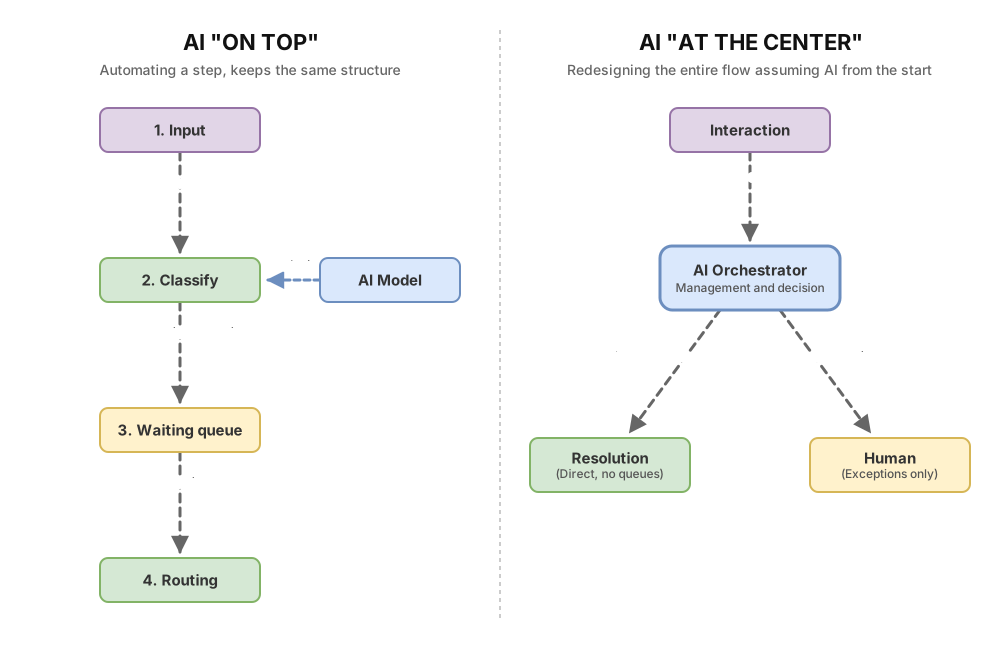
That is why the redesign opens a door that automation cannot. When AI is at the center, some steps disappear, others merge and sometimes a way of delivering the service appears that was not viable before because it would have needed a huge team. That is the interesting part, and also the one that opens up new business models that did not add up before. If that idea is on your mind, I develop it in new businesses with AI.
When should you NOT redesign, and automating is enough?
You should not redesign when the risk and the cost of the change outweigh the gain, and this happens more than the hype admits. Redesigning a process means touching how people work, changing tools, training people and living for a while with two ways of doing things at once. None of that is free, and much of the spend is not in the technology but in the people.
There are clear signs that it is better to stick to automating:
- Low volume. If the process happens a few times a month, redesigning the whole thing rarely pays off the effort. Automate the annoying step and get on with your life.
- Regulated processes. When there is regulation involved, every change has to be justified and audited. The redesign becomes slow and expensive for reasons that do not depend on you.
- Everything works fine. If the current process has no real bottleneck, redesigning it is fixing something that is not broken. The improvement will be small and the disruption large.
- Low tolerance for error. If a mistake has serious consequences, for a person or for the business, it is better to keep a human reviewing and move slowly.
This is not pessimism. Starting by automating and only redesigning when the numbers ask for it is the prudent path. The course AI without hype is about exactly that: gaining judgment to decide where you put AI and where you do not, with real cases instead of promises.
How to decide: four questions before touching anything
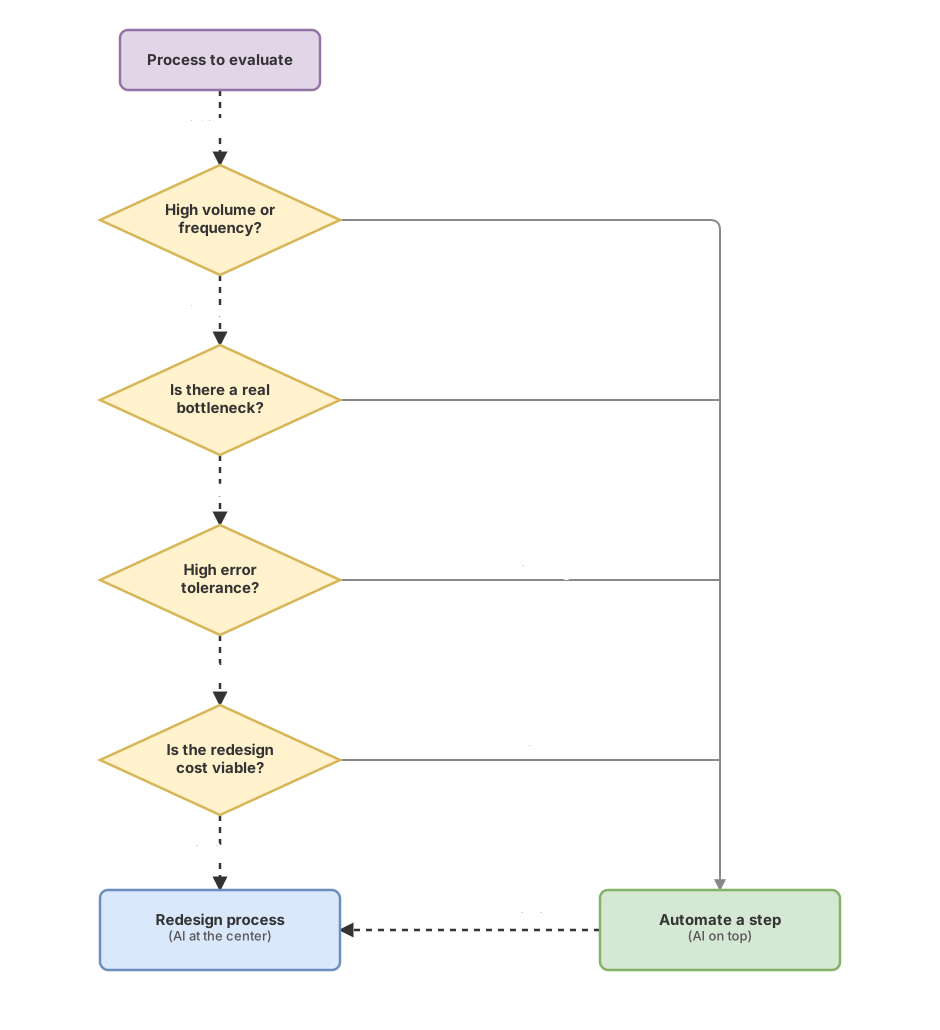
Before choosing between automating or redesigning, answer four concrete questions about the process. You do not need an expensive study, you need honesty.
- How often does it happen? High volume justifies investing in a redesign; low volume almost always calls for just automating.
- Where is the bottleneck really? Not where you think, but where the work piles up. Sometimes you automate the wrong step and the jam continues one phase further down.
- How much does an error hurt? If a failure is costly or affects a person, you need human oversight and a slower pace, whichever option you choose.
- What does the redesign really cost? Add up training, changing tools and the time in which the old and the new coexist, not just the software license.
With those answers, the choice becomes clearer.
Here is the comparison in short:
| Criterion | AI on top (automate) | AI at the center (redesign) |
|---|---|---|
| What you touch | A single step | The whole circuit |
| Upfront cost | Low | High |
| Risk | Low, almost nothing breaks | High, it changes how people work |
| Improvement ceiling | Limited by the old design | Broad, whole steps can disappear |
| When to choose it | Low volume, stable process, costly error | High volume, clear bottleneck, room to move |
If you are unsure, the healthy order is this: automate first, measure, and only then consider the redesign. That order fits a phased AI adoption plan, which avoids betting everything at once.
The cost nobody puts on the books
The real cost of an AI project is almost never the one on the first spreadsheet. The tool is usually the small part. What gets forgotten is what actually decides whether the project goes well or ends up an expensive experiment.
Four line items worth including from the start:
- Change management. People have to change how they work, and that creates legitimate doubts and resistance. Without support, the new process coexists with the old one forever and you save nothing.
- Data quality. A model works with the information you give it. If your data is dirty or incomplete, the result will be too, and cleaning it takes time.
- Human oversight. Since the model sometimes gets things wrong with confidence, someone has to review what matters. That work does not disappear, it turns into judgment.
- Maintenance. A process with AI is not set up and forgotten. It has to be watched, tuned and corrected when the business or the data changes.
None of these items can be pinned to a single figure that works for everyone, because it depends on your case. What I can say is that ignoring them is the most common way for a promising project to end up abandoned. This overview of where AI pays off in a company helps place each decision before you commit money.
Common mistakes when deciding
Automating the wrong bottleneck. This is the most expensive and most common mistake. You put AI to speed up a step that has plenty of slack, and the real jam, one phase further down, stays exactly the same. Before automating anything, look at where the work really piles up.
Redesigning for fashion. Redesigning because “you have to be into AI” and not because the volume calls for it is throwing money away. The redesign is justified by a real bottleneck and a volume that sustains it, not by the pressure of not falling behind.
Removing the person too soon. Since the model hallucinates, pulling human oversight too early is the fast track to a public error and to losing trust. The person leaves the circuit slowly and only when the data shows it can be done.
Checklist before you invest
- I have measured where the real bottleneck is, not where I assume it is
- I know the process volume and whether it justifies a redesign
- I have estimated how much an error hurts and who reviews it
- I have added up training, changing tools and the coexistence of old and new
- I start by automating one step and measure before planning the redesign
- I keep human oversight in the steps where an error is costly
- I have planned who maintains the process when the data or the business changes
Frequently asked questions
What exactly does it mean to put “AI at the center” of a process?
It means redesigning the process assuming AI is available from the start, instead of bolting a model on top of the circuit you already had. In practice it means asking which steps existed only because of human limits, like queues or rigid forms, and checking whether, with AI at the center, those steps can disappear or merge.
Is redesigning the process always better than automating a step?
No. Redesigning usually delivers a bigger leap, but it costs more and risks more. In low-volume, regulated or already-working processes, automating one specific step is the sensible option. The practical rule is to automate first, measure and redesign only when the volume and the bottleneck ask for it.
How much does it cost to redesign processes with AI?
There is no single figure, because it depends on the process and your starting point. What matters is that the real cost goes well beyond the tool: it includes change management, data cleanup, human oversight and ongoing maintenance. Ignoring those items is the most common reason a project ends up half-finished.
Can I remove people from the process entirely?
In most cases it is not worth it, at least not all at once. A language model sometimes gets things wrong with total confidence, so in the steps where an error is costly you need someone reviewing. The person leaves the circuit little by little and only when the data shows the system is reliable at that task.
Related articles
AI Use Cases in Business: Which Ones to Prioritize
A framework for knowing which of your tasks are a good fit for AI and which ones are money down the drain: AI use cases in business, no hype.
New businesses AI makes viable that didn’t pay off before
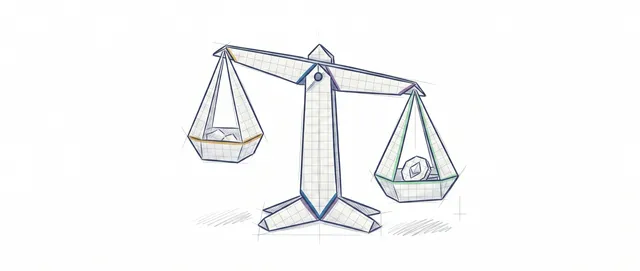
AI doesn’t just make what you already do cheaper: it makes viable businesses and services that never covered their cost. Where the real opportunity is, no hype.
An AI adoption plan for your company: the step-by-step roadmap
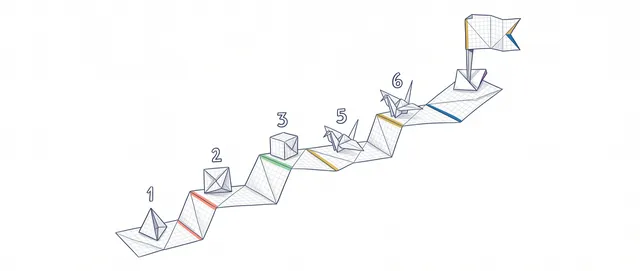
How to adopt AI in your company without burning through the budget: six ordered steps, from building judgment to scaling. A realistic roadmap, with no guru promises.