
AI SaaS: What to Demand Before You Sign
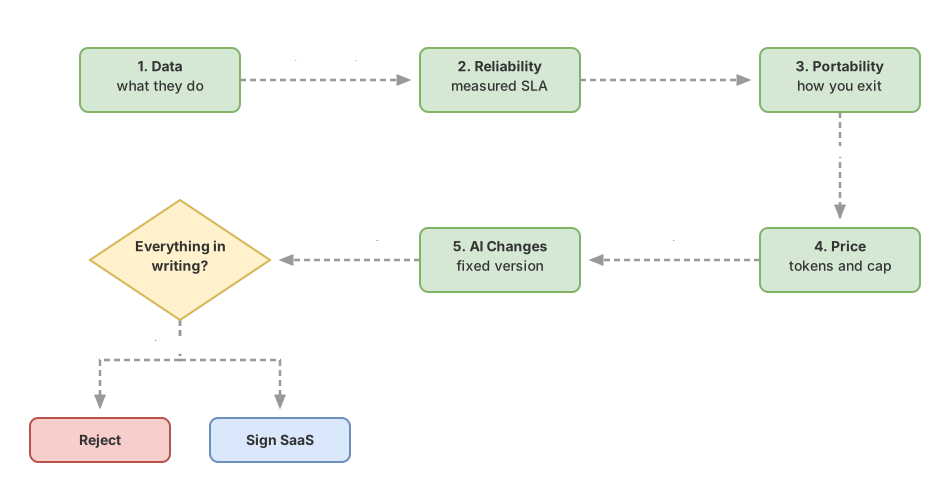
Before signing an AI SaaS, demand five things in writing: what it does with your data, reliability, portability, usage pricing, and model changes.
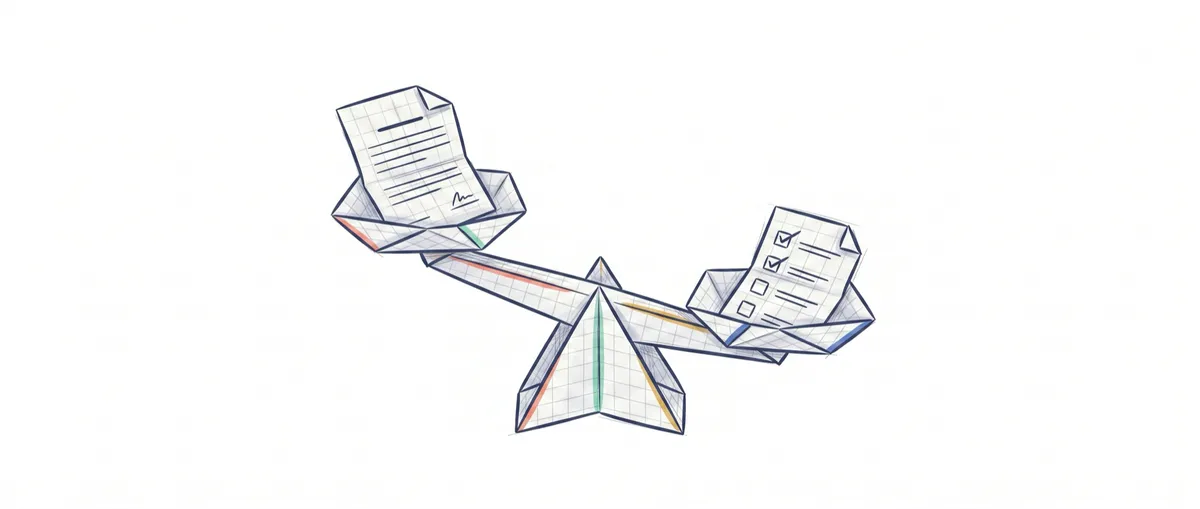
Before you sign a contract for AI software, ask for five things in writing: what exactly it does with your data, what reliability it guarantees, how you get your information back if you leave, how real usage is billed, and what happens if they change the AI engine underneath. If the salesperson answers everything verbally but none of it shows up in the contract, you already have your answer. It’s no.
You don’t need to understand how AI works internally to negotiate well. You need to know which questions force the provider to commit, and which ones only get you a pretty demo. This is the script for that conversation.
Why “AI” software isn’t bought like the rest
Normal software is predictable. You feed in the same data and the same result comes out, today and a year from now. You can test it once and trust it will behave the same way every time.
Software with generative AI works differently. Generative AI is the technology that drafts text, summarizes documents, or answers questions from a model, which is the statistical “brain” trained on enormous amounts of text. That model doesn’t look up a database with the correct answer: it builds the answer word by word, calculating what is most probable. That’s why two almost identical questions can give somewhat different answers, and why it sometimes gets things wrong with total confidence. When the AI states something false with complete assurance, the industry calls it a hallucination.
That difference changes everything at the negotiating table. You aren’t buying a feature that always does the same thing. You’re buying a system that gets it right most of the time and fails once in a while, and you need to know in advance who answers when it fails. That’s where the five demands come from.
If you’re at that table and still unsure whether to buy a ready-made tool or commission your own, that earlier decision is one I work through in buy or build AI. This guide assumes you already decided to buy.
1. What exactly does it do with your data?
This is the question most providers dodge and the one that can cost you the most. When your team writes into the tool, that information leaves your company and goes to the provider’s servers, and often to those of a third party that supplies the AI underneath.
Ask for these specific answers in writing:
- Do they use your data to train their model? If the answer is yes, your internal documents may end up influencing what the system replies to another customer. Many business contracts exclude this by default, but you have to see it on paper, not in a settings toggle they can change tomorrow.
- Where is it processed? If the data leaves the European Union, you enter the territory of the international transfers under the GDPR, the European data protection regulation. It isn’t impossible, but it has requirements.
- Who else touches it? The provider almost always relies on other companies, known as subprocessors. Ask for the list and how they notify you if it changes.
- How is it deleted, and how quickly? When you cancel, your data should disappear from their systems, not stick around “just in case.”
A warning. None of this is legal advice. If you handle personal or sensitive data, this part of the contract should be reviewed by someone in data protection before you sign. Here I’m only giving you the questions that open that conversation. The heart of the matter, what it really means to send your information to a third party’s model, I break down in data to third-party AI models.
2. What reliability does it guarantee in writing?
This is where almost every contract cheats without looking like it. They offer you an SLA, which is a measurable service commitment: for example, “the system will be available 99.9% of the time.” It sounds like a quality guarantee. It isn’t.
That number measures that the service is up and responding, not that the response is correct. An AI assistant can have perfect availability and still hand your customer a wrong fact with all the confidence in the world. Availability and accuracy are two separate commitments, and the contract usually includes only the first.

What you have to ask for is the second one:
- Do they measure the error rate of the AI’s responses? How, and do they show it to you?
- Is there human review in the sensitive cases, or does the AI answer the end customer on its own?
- When the AI gets it wrong and that error has consequences, who is liable? A Canadian tribunal already forced Air Canada to honor what its automated assistant had mistakenly promised a passenger, so the answer “but the AI said it” protects no one.
If the provider can’t or won’t talk about the quality of the responses and only shows you the availability percentage, you already know which part of the risk stays on your side of the fence.
3. Can you leave without getting trapped?
Signing is easy. The hard part is leaving. Before you go in, look at the exit door.
Portability is your ability to take everything of yours with you if you decide to switch providers: your data, your history, the configurations you set up, in a format another system can read. A file you can open and reuse, not a thousand-page PDF or a screenshot.
Demand in writing that you can export all your data and history, in a standard format another system can read, without penalty and within a reasonable timeframe. The question that sums it up: “if I want to leave tomorrow, in how many days do I have everything of mine out, and who hands it over?” If the answer is vague, the provider is designing your dependence. The harder it is to leave, the more expensive it gets to stay when they raise the price.
4. How is usage really billed?
Many AI tools don’t charge a flat fee. They charge by usage, and usage is measured in something called tokens. A token is a fragment of text, roughly a few letters or a short word. Every time the AI reads what you send it and writes a response, it consumes tokens, and you pay for that volume.
The problem with usage-based pricing is that the pilot bill looks nothing like the real bill. In the pilot, four people use it carefully. In production, the whole company uses it, with longer texts and more times a day. The cost doesn’t grow in a straight line with the number of users: it grows with how much text they process, and that spikes sooner than people expect.
Before signing, ask for a cost estimate for your real volume, not the pilot’s. And demand the ability to set a spending cap or an alert, so that a usage spike doesn’t reach you as a surprise bill at the end of the month. A serious provider will help you estimate this. One that dodges the question is selling you the pretty part.
5. What happens if they change the model underneath?
This is the point almost nobody negotiates and the one that can most quietly break your service. The provider doesn’t build its own AI: it rents it from one of the big model companies. And those models get updated, retired, and replaced every few months.
The day the provider swaps the AI engine for a new version, your tool’s behavior can change without anyone warning you. A flow that worked starts giving different answers. The tone changes. Something you classified well suddenly fails. You didn’t touch a thing, but the ground shifted under you.
Ask for one of these guarantees in writing: that they notify you in advance before changing the model, that you can pin a version for a while, or that there’s a trial period to validate the change before it affects your operation. A provider having this answer ready also tells you they’ve taken the boring part of running AI seriously.
The test before you sign: run a small PoC
None of these five answers is validated in a demo. The demo is set up to shine. What validates them is a proof of concept, a PoC: a small, bounded test with your real data, over a couple of weeks, measuring what actually matters to you.
Don’t look for the “wow.” Look for the edges. Feed it your rare cases, the badly scanned documents, the convoluted query from your most difficult customer. Note how many times it gets it right, how many times it makes something up, how much it cost over those two weeks, and what happens when you give it something it didn’t expect. That record, compared with what the salesperson promises, is the information you really negotiate with.
Here’s the checklist to bring to the meeting:
| What to demand | Ask for it in writing | Warning sign |
|---|---|---|
| Use of your data | That they don’t train on it; where it’s processed; list of third parties; deletion on cancellation | ”It’s in the settings” instead of in the contract |
| Reliability | Measured error rate and who is liable for a failure, not just availability | They only show you 99.9% “uptime” |
| Portability | Full export, standard format, no penalty or endless timeframes | They can’t tell you how many days it takes to leave |
| Usage pricing | Estimate for your real volume and a spending cap | The estimate is the pilot’s |
| Model changes | Advance notice, pinned version, or trial period | ”We always use the latest” as if it were an advantage |
Reading an AI contract with this level of detail is judgment you can train, not a gift. In the course AI without hype we work on exactly this: telling the marketing promise apart from the real guarantee, with examples from an ordinary small business and without needing to know how to code.
To place these five demands within the full picture of where to start with AI in your company, the overview is in AI use cases in companies.
Frequently asked questions
What if the provider says it can’t commit to the quality of the responses because “that’s just how AI is”?
It’s a half-honest answer. No serious provider will guarantee zero errors, because generative AI gets things wrong by design. What it can commit to is how it measures those errors, where it puts human review, and who takes responsibility when the failure has consequences. If it can’t commit to even that, it isn’t that AI is just like that: it’s that the product isn’t ready for your case.
Is it worth paying a lawyer to review the contract?
It depends on the risk. If the tool touches personal data, decisions that affect customers, or money, a review by someone in data protection and legal costs far less than the problem it prevents. For a low-risk internal tool, demanding this checklist in writing and reading it calmly is usually enough.
Which of the five matters most?
The two most people ignore and pay dearest for: what it does with your data and how you leave. Cost and reliability show up early and hurt early, so they get fixed. Dependence and a data leak show up late, when it’s already hard to turn back.
Does the European AI Act require any of this from me?
The European Union’s AI regulation classifies systems by risk levels and places more obligations on the most sensitive uses. It may affect your case or not, depending on what you use the tool for. Don’t rush to interpret it on your own: have someone who knows the rule tell you which level your specific use falls into. This isn’t legal advice either, just a heads-up that the question exists.
Related articles

AI Use Cases in Business: Which Ones to Prioritize
A framework for knowing which of your tasks are a good fit for AI and which ones are money down the drain: AI use cases in business, no hype.

Buy or Build AI: How to Decide Without Overspending
Buy AI SaaS, build custom, or wait. An honest framework to decide how to acquire AI in your company based on real cost and vendor dependency.

What happens to the data you send to an AI model
When your team types something into an AI tool, that text leaves your company. What the provider does with your data and what to demand before approving the tool.