
ChatGPT for business: what it can and can't do
What ChatGPT does well for a business (drafts, summaries, ideation) and where you can't trust it: private data, exact figures, and the privacy warning.
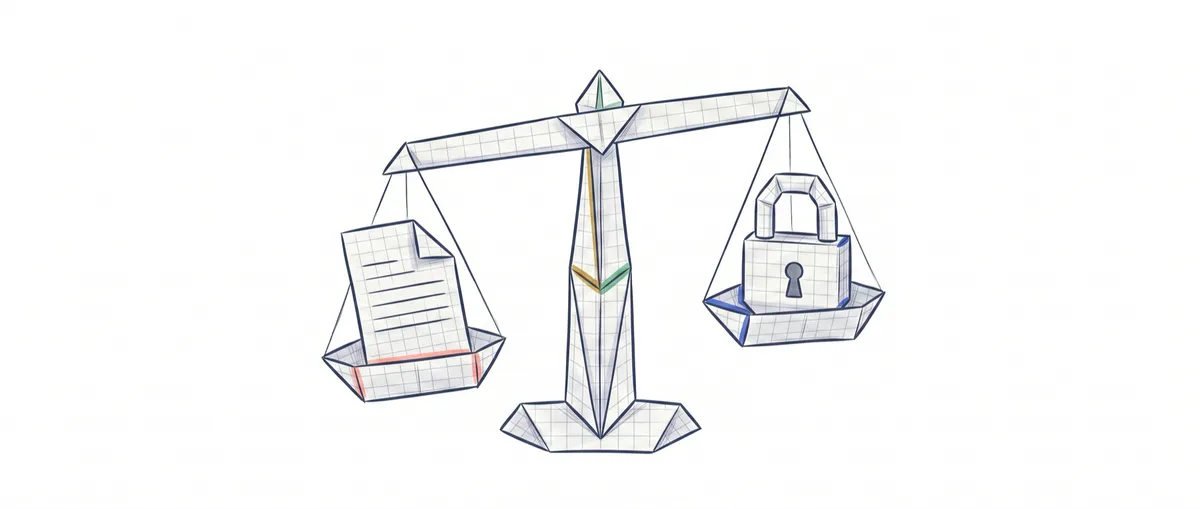
If you run a business and wonder what ChatGPT really gives you, the honest answer is short: it’s good for writing drafts and summarizing text, and it’s no good at giving you reliable data about your own business. Everything else is nuance on those two sentences. In this article I explain, without the hype, what it does well, what it doesn’t, and the privacy warning that almost nobody gives you before you paste your customers’ data into a website.
I’m not neutral on this: I think most articles about “ChatGPT for your business” sell a picture that’s far too optimistic. Here I start with the no.
What is ChatGPT, in plain terms?
ChatGPT is a program that predicts the most likely text from what you type. Nothing more, and it’s important you take that sentence in before you make any decision with it.
Think of it like your phone’s autocomplete, but far more sophisticated. When your phone suggests the next word as you type a message, it doesn’t “know” what you mean: it has seen millions of sentences and calculates which word usually comes next. ChatGPT does the same thing on a huge scale, with whole paragraphs instead of single words. That kind of program is called a language model, and if you want to understand the machinery inside more slowly, I cover it in how generative AI works.
The practical consequence of this is the key to the whole article: ChatGPT does not query a database, does not look for the truth, and does not check whether what it says is correct. It generates the answer that sounds most plausible. Most of the time that answer is correct and useful. Every so often it’s an invention with all the appearance of a real fact, and that’s where the danger lies.
What can ChatGPT do well in a business?
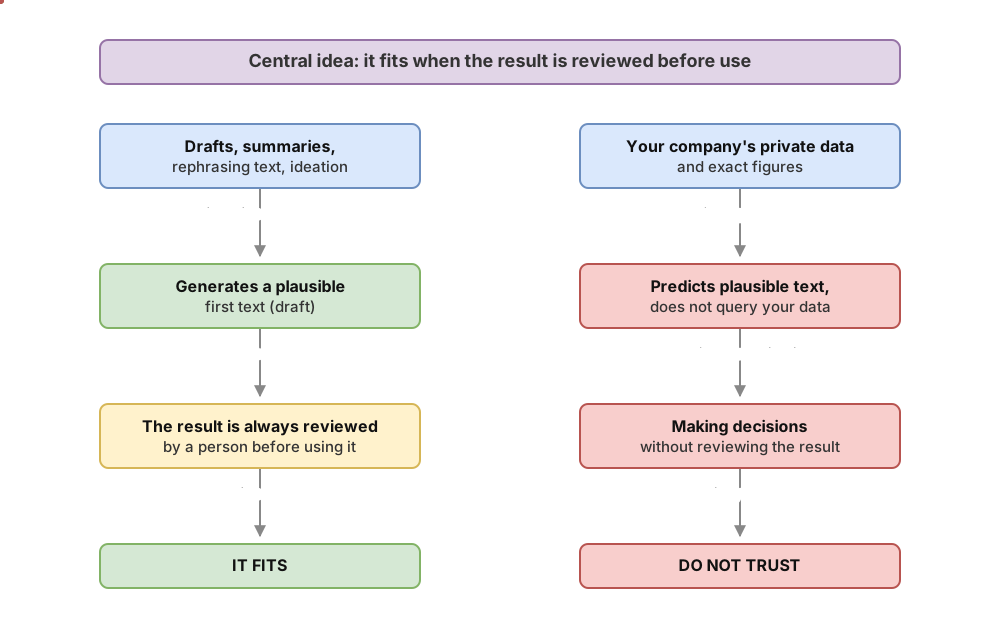
ChatGPT performs well on any task where the value is in producing a first text that a person then reviews. If the result always passes through human eyes before it goes out, it fits. These are the uses where it genuinely saves time:
- Drafts. A first email to a supplier, the structure of a sales proposal, a job posting. You correct it, but starting from a blank page costs more than correcting.
- Summaries. You paste in a long document, a meeting’s minutes, or a thread of emails and it gives you back the main points. Check that it hasn’t left out anything important, but it does almost all the mechanical work.
- Rephrasing and adjusting tone. The same message in a formal version for a client and a friendly version for your team. Translating into another language for a first read.
- Ideation. Ten names for a product, angles for a campaign, likely objections from a client before a meeting. Don’t expect the brilliant idea: expect a starting point to discard and choose from.
Notice the pattern. In all these cases ChatGPT’s job is a draft, and the decision is still yours. That’s where it adds real value and where the risk is low, because if it gets something wrong you see it and fix it before it goes out the door.
What can’t it do reliably?
ChatGPT is not to be trusted when the answer has to be an exact, verifiable fact, and this clashes head-on with what many people expect from it. Three concrete cases:
It doesn’t know your company’s data. If you ask it how many units you sold last quarter or what the margin on product X is, it doesn’t know. It has no access to your systems. Since it can’t say “I don’t know” as easily as a person, it will give you a figure that looks reasonable and that it made up. To make it work with your real data you have to connect it to that data on purpose, with a technical project behind it, and that’s a different matter altogether.
It doesn’t give reliable exact figures. Prices, dates, percentages, legal capacities, articles of a regulation. It can get it right and it can get it wrong, and the problem is that it fails with the same confident tone it uses when it’s right. Never use a figure ChatGPT gives you without checking it against the original source.
It doesn’t verify facts. It summarizes an article and invents a sentence that sounds like it was in there. It cites a study that doesn’t exist. It writes with total confidence even when it’s wrong, because its job is to sound plausible, not to be correct. This invention with the appearance of a fact has a technical name, hallucination, and I explain it in detail in what generative AI is.
The rule that sums up all three: the more a task looks like “give me a figure I’m going to use without checking”, the worse an idea it is to hand it to ChatGPT.
A table to decide at a glance
| Task | Does it fit ChatGPT? | Why |
|---|---|---|
| Drafting an email or proposal | Yes | You review it before sending |
| Summarizing a long document | Yes | It saves the mechanical work, you validate |
| Coming up with ideas for a campaign | Yes | You want starting points, not the final answer |
| Checking how much you sold last month | No | It has no access to your data, it invents the figure |
| Confirming a legal fact or an exact price | No | It can fail with a confident tone, go to the source |
| Deciding who to hire or which supplier to choose | No | It’s a business decision, not a text to review |
The warning almost nobody gives you: your customers’ data
Don’t paste your customers’ confidential data into the free version of ChatGPT without knowing what happens to it. This is the point most enthusiastic articles skip, and it’s the one that can land you in serious trouble.
When you type something into the public version, that text travels to the servers of a company that isn’t yours. Depending on the plan you use and its configuration, that content may be used to train future versions of the system. If names, emails, customer numbers, medical histories, or third parties’ financial data go in there, you’re sharing personal information with an external provider, and in Europe that’s governed by the GDPR, the data protection law.
I’m not going to give you the legal fine print here, partly because this isn’t legal advice and the terms change over time. What I will tell you as a rule of thumb: treat the public version of ChatGPT as if you were writing on a postcard. If you wouldn’t put it on a postcard that someone outside could read, don’t paste it there. Uploading customer data has enough to it to deserve its own treatment, and I go into it in uploading customer data to ChatGPT.
How to start without burning yourself
The sensible way to start is with draft tasks and low risk, not with decisions. If you begin small and always review, the room to hurt yourself is minimal and you quickly learn where it really helps. This is the approach I’d take in your shoes:
- Start with a concrete, repetitive writing task, not with “let’s see what it does for my business”.
- Always review the output before using it. ChatGPT makes the first draft, the last word belongs to a person.
- Don’t put sensitive customer data or confidential information into the public version.
- Treat it like a quick, sharp intern with no judgment: useful for producing, never for deciding on its own.
- Compare what it gives you with what you already know. If a figure surprises you, be suspicious and check it.
That judgment, knowing when AI is helping you and when it’s slipping one past you, is exactly what we work on in the AI without hype course: understanding what the tool does under the hood so you can decide with your head, without needing to be technical or to believe every headline.
Frequently asked questions
Does ChatGPT keep what I write?
It depends on the plan and the configuration. In the free public version, what you write may be used to improve the system, so treat it as information that leaves your company. Paid business plans offer different terms, but before trusting them with sensitive data you have to read their specific terms, not assume they’re protected.
Can ChatGPT give me data about my own company?
Not on its own. It has no access to your systems or your records, so if you ask it about your sales or your customers, it will invent an answer that sounds believable. Connecting it to your real data is possible, but it requires a specific technical project and it’s not what happens when you open the website and type.
Is the free version good enough for a business?
For trying it out and for tasks with no sensitive data, yes. For working with confidential customer information or for something the business depends on, the free version falls short on guarantees. That’s when it’s worth considering a business plan and reading carefully what it offers in privacy and control.
Is it going to replace someone on my team?
Not in the way the headlines paint it. ChatGPT speeds up writing and summarizing work, but it doesn’t make decisions or take responsibility. The realistic outcome is that it helps your team move faster on certain tasks, not that it takes their place. The one who really gets value out of it is the person who knows how to direct it and review what it produces.
Does it really make things up?
Yes, and with total confidence. It can give you a quote, a fact, or a figure that don’t exist, written with the same self-assurance as if they were true. It’s not a rare glitch, it’s how it works: it generates what sounds plausible. That’s why anything that comes out of it that you’re going to use as a fact has to be checked against the original source.
Related articles

How generative AI works, explained without the jargon
Generative AI doesn't look up truths: it predicts the most plausible word. That mental model explains why it hallucinates, why it changes, and where it fails.

What Generative AI Is (and What It Isn't)
What generative AI is in plain business terms: how it differs from the automation you already have, what it can NOT do, and what it's actually good for.
Can You Paste Customer Data Into ChatGPT Without Breaking GDPR?
Pasting customer data into ChatGPT isn't illegal by default, but it depends on your plan, your legal basis, and whether you can anonymize. A no-hype guide.