
AI hype red flags: how to spot vaporware in a proposal
A guide for non-technical decision-makers: the concrete signs that separate a serious AI proposal from hot air, before you sign and pay.
You have an AI proposal on the table and something feels off. The presentation was flawless, the promises huge, and yet you leave the meeting with the feeling that someone is selling you hot air. Good instinct: that feeling is usually right. The difference between a serious proposal and hot air is not in the technology they offer, it is in what the proposal dares to say about real cost, limits and what happens when the system gets things wrong. And you can spot that without knowing a single line of code.
This is the judgment that saves you from paying for something that never really works.
Why does AI hype sell so well?
Because the demonstration is easy to make and hard to judge. A vendor shows you a screen where you type a question and the system answers brilliantly. It looks like magic. What you do not see is that this perfect answer was rehearsed with the most favorable case, with clean data and without any of the thousand odd situations that show up when real people use it every day.
On top of that there is background pressure. “Everyone is doing something with AI” and nobody wants to be last. That fear of falling behind makes an executive approve a project that in any other area they would break down to the last euro. With AI, the novelty and the shine switch off the usual questions.
The hot-air seller knows this. That is why they talk to you about the future and about what you “will be able to” do, and never about the Monday morning when someone has to keep that thing running.
The mother of all signals: they confuse a demo with a product
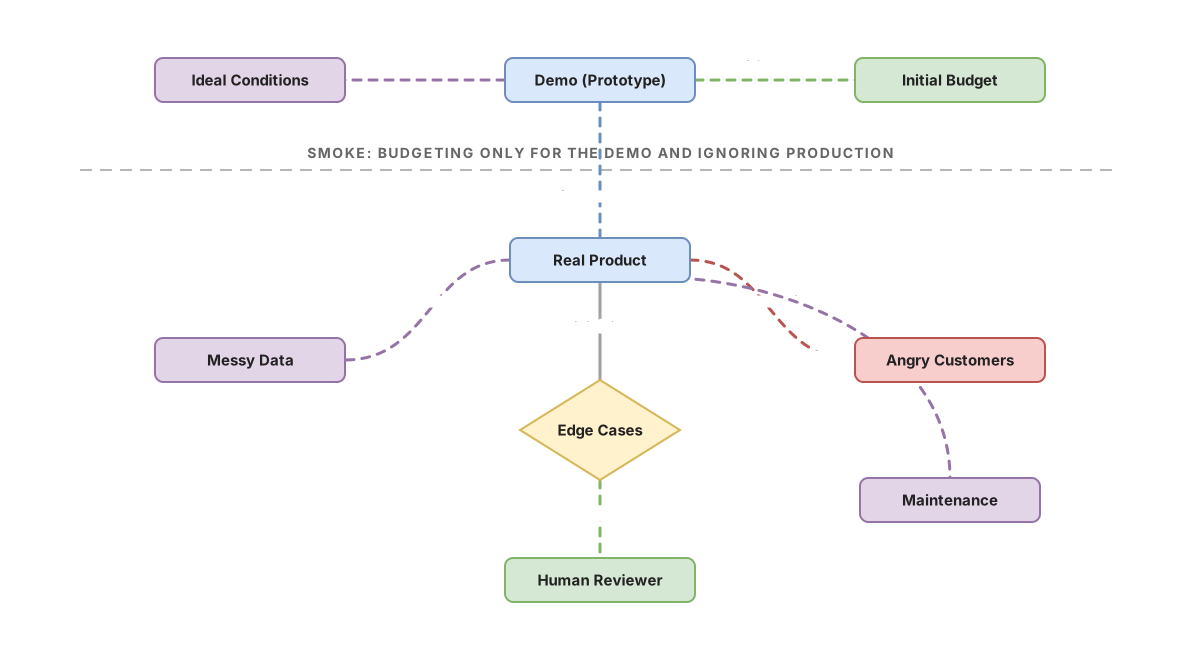
Most of the hot air boils down to one confusion: presenting a demo as if it were a product. It is worth understanding this difference well, because almost every other signal comes from it.
A demo is a prototype that works once, in front of you, under prepared conditions. It serves to illustrate an idea. It is cheap and quick to put together, which is why serious vendors and hot-air ones can both show you an equally flashy one.
A product is another thing. It works thousands of times, with real and messy data, with the odd cases nobody foresaw, with angry customers writing things the system did not expect. And someone has to maintain it when it breaks, update it when the rules change and answer for it when it gives a wrong reply to a customer. The jump from demo to product is where almost all the cost, almost all the risk and almost all the real work live.
When a proposal shows you the demo and budgets it as if it were the product, it is not lying to you about the technology. It is hiding most of the project from you.
Think of it with an analogy. An architect’s model is beautiful and fits on a table. You would not move in and live inside it. Building the real building, with its foundations, its plumbing and its upkeep, is a project of another size. Nobody confuses the model with the house. With AI, plenty of people do, because the demo looks so finished that it seems like the house.
The four questions a serious proposal already answers
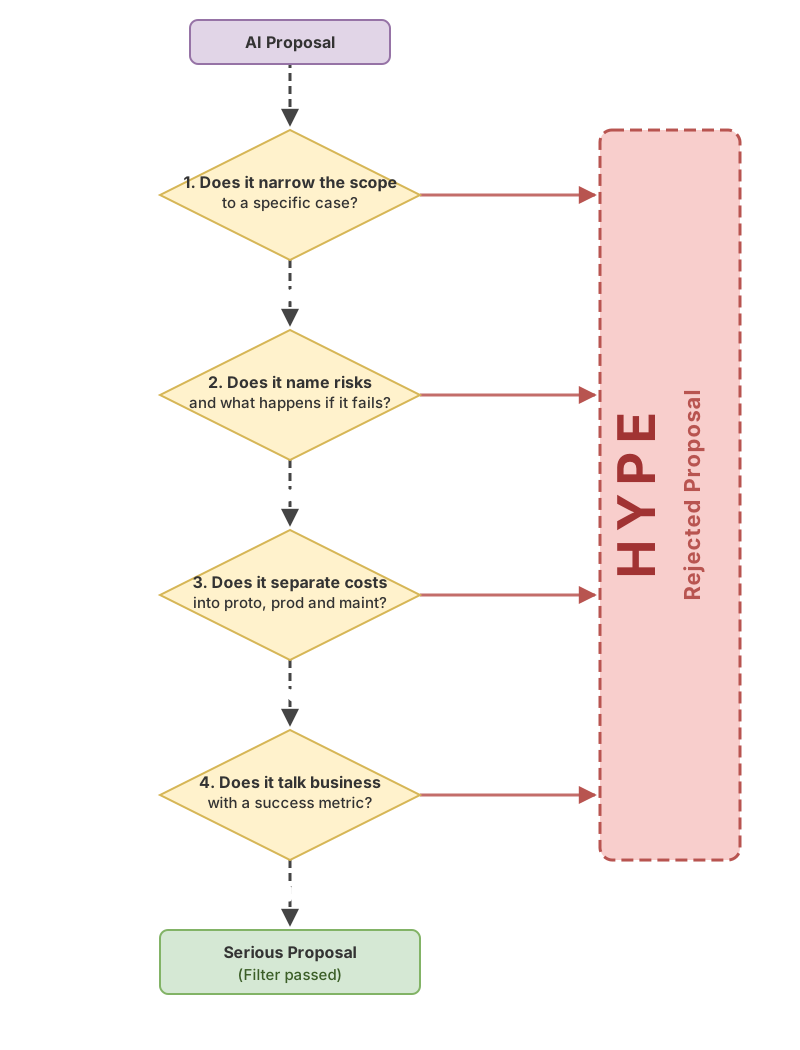
A serious proposal answers four questions on its own before you have to ask them. If you have to drag them out one by one, take it as a warning.
The first: what specific problem it solves. Not “improve efficiency” or “unlock the potential of your data”, but something you can measure, such as reducing the response time to a specific type of email. The second: how success is measured. If nobody defines what it means for the system to “work well”, there will be no way to know whether the money was worth it. The third: what happens when it gets things wrong, because it will get things wrong; the question is whether there is a person who reviews, a limit that stops the doubtful cases or a fallback plan. The fourth: how much it costs to maintain, not just to build.
I covered these four questions in detail in the four questions before using AI, because they are the most useful tool you have as a decision-maker with no technical background. A proposal that answers them on its own is treating you like an adult. One that dodges them is selling you the model.
Hype signals you can spot in the language
You do not need to understand the technology to recognize these signals. They are in how the proposal is told.
- It promises magic. Words like “autonomous”, “it does it on its own” or “with no human involvement” described without any nuance. The AI systems that work in serious companies almost always have a person reviewing the important cases. Whoever sells you total autonomy is selling you the part that does not exist yet.
- It never mentions failure. If the word risk, failure, limit or review does not appear even once in the whole proposal, it is not that their system does not fail. It is that they are not going to tell you.
- It talks about the technology, not the problem. If the proposal spends its time naming the brand of the model they use and how powerful it is, and barely talks about your business, watch out. The brand of the model matters as little as the brand of the drill you hang a picture with. What matters is whether the picture ends up straight.
- It budgets the prototype and stays quiet about production. A suspiciously tight price is usually the price of the demo, not of the system that withstands real use nor of maintaining it for the rest of the year.
- It does not narrow the scope. If it “does everything”, be wary. Useful systems solve one specific problem well. The ones that promise to solve everything usually solve nothing fully.
- It throws out round, spectacular figures with no source. “Cuts costs by 70%” without explaining where that number comes from is marketing, not a commitment. A serious figure comes with its source and with the warning that in your case it may be different.
Spotting two or three of these signals in the same proposal already gives you a reason to ask them to rewrite it with their feet on the ground.
How a serious proposal sounds instead
A serious proposal has a different tone, and it is almost always less exciting. That is exactly what makes it trustworthy.
It narrows the scope to a specific case and admits what it will not do. It names the risks without you having to ask for them, and it explains what happens when the system gets things wrong: who reviews, what limit stops the doubtful cases, what happens if one day it stops working. It splits the money into three separate parts, the prototype, going into production and the yearly maintenance, instead of giving you a single, round figure. It talks in terms of your business, with a clear way to check whether the result was worth it. And at some point it tells you no, that some particular thing cannot be done yet or is not worth doing.
That “no” is the best signal of all. Whoever tells you no to something is telling you the truth about everything else.
This judgment, the ability to read a proposal and know where to look, is exactly what we work on with real examples in the AI without hype course. Not to turn you into a techie, but so that no pretty presentation ever clouds your judgment again.
Hype versus a serious proposal, at a glance
| Aspect | Hype signal | Serious proposal |
|---|---|---|
| Scope | ”Does everything”, no limits | One specific problem, with what it will not do written down |
| What it shows | A demo presented as if it were the product | The demo and, separately, what is missing to reach production |
| Cost | A single, tight figure | Prototype, production and maintenance separated |
| Failure | Never mentioned | What happens on failure and who reviews is described |
| Measurement | ”Improves efficiency” | A concrete way to know whether it worked |
| Language | The model brand and big words | Your business and a checkable result |
If you mentally fill in this table with the proposal in front of you and everything falls into the left-hand column, you already know what you have.
What reading this list does NOT solve
Being honest with myself forces me to tell you what this guide does not do. It does not turn you into a technical expert nor does it let you audit from the inside what they are selling you. It gives you the judgment to ask and to smell the hot air, which is a lot, but not to verify that the technical part is well built.
For a big decision, with real money or serious risk on the line, you still need an independent second opinion from someone who does not get paid to sell you the project. On how to pick that person without ending up hiring another hot-air seller, I wrote a separate guide on hiring an AI consultant. And if you want to see the full map of where AI adds real value in a company and where it does not, the starting point is AI use cases in companies.
This list is your first filter. Cheap, fast and enough to rule out most of the hot air before you spend a single euro.
Frequently asked questions
Is a really good demo a bad sign?
Not on its own. A good demo is useful for understanding the idea, and serious vendors make them too. The hype signal is not that the demo is good, it is that they present it as if it were the finished product and budget it as such. Always ask what is missing to go from that demo to something that works day to day, and how much that jump costs.
Is every cheap proposal hype?
No, but a surprisingly low price is usually the price of the prototype and not of the real system. The real cost is almost always in taking the AI into production and maintaining it for the rest of the year. If the budget does not separate those items, today’s bargain turns into the expensive surprise six months from now.
If the vendor uses the latest AI model on the market, is that a guarantee of quality?
No. The brand or version of the model matters much less than it seems. A good model badly applied to your problem gives bad results, and a modest model well fitted to a specific case can work perfectly well. Look at how the proposal talks about your business and the risks, not at the name of the technology.
Can I spot AI hype without knowing anything about technology?
Yes, and in fact that is the goal of this guide. The hype signals are in the language and in the structure of the proposal, not in the code. If it narrows the scope, names the risks, breaks out the costs and answers what happens when the system gets things wrong, it is on the right track. If it promises magic and dodges those questions, you already have your answer.
Related articles
AI Use Cases in Business: Which Ones to Prioritize
A framework for knowing which of your tasks are a good fit for AI and which ones are money down the drain: AI use cases in business, no hype.

4 questions before rolling out AI in your company
The 4-question framework to approve, condition, or reject an AI project without being technical. Cost of error, control, return, and accountability.

How to Choose an AI Consultant (and Spot a Guru)
A guide to choosing an AI consultant or vendor without falling for magic promises: the power of the NO, red flags, and the questions you should ask.