
How to Choose an AI Consultant (and Spot a Guru)
A guide to choosing an AI consultant or vendor without falling for magic promises: the power of the NO, red flags, and the questions you should ask.
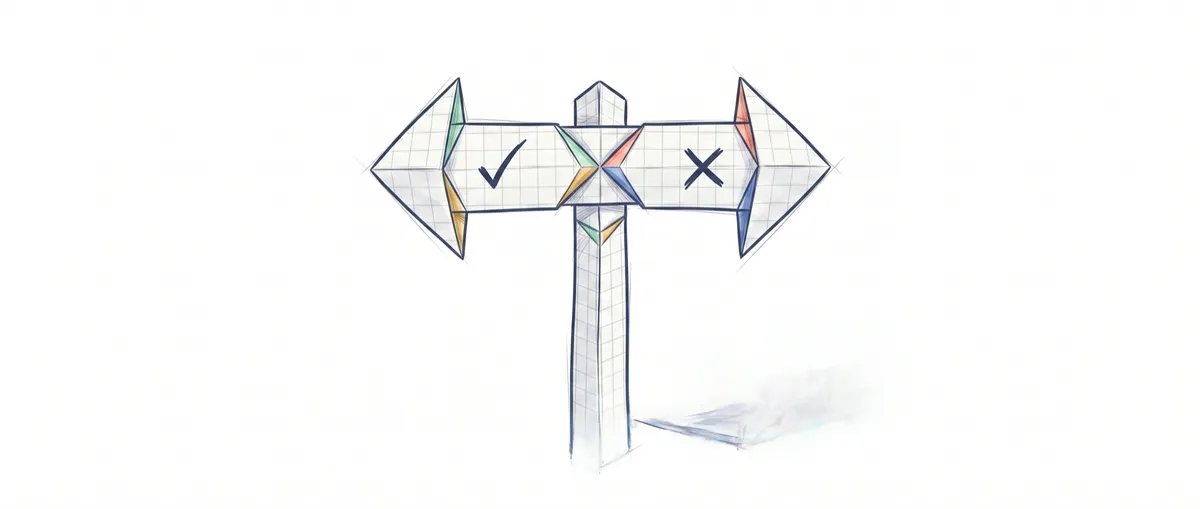
The best sign of a good AI consultant is counterintuitive: they start with a no. Before promising you anything, they tell you which part of your business you shouldn’t automate yet and which problems artificial intelligence won’t solve. The guru does the opposite. They say yes to everything, and the bigger the promise, the fewer questions they ask about your company.
If you’re about to spend money on someone who’s going to “bring AI into your business”, this guide is here to separate the person who helps you decide from the one who’s just selling you an illusion. You don’t need to know anything technical. You need to know what to ask.
Consultant, vendor or guru: not the same thing
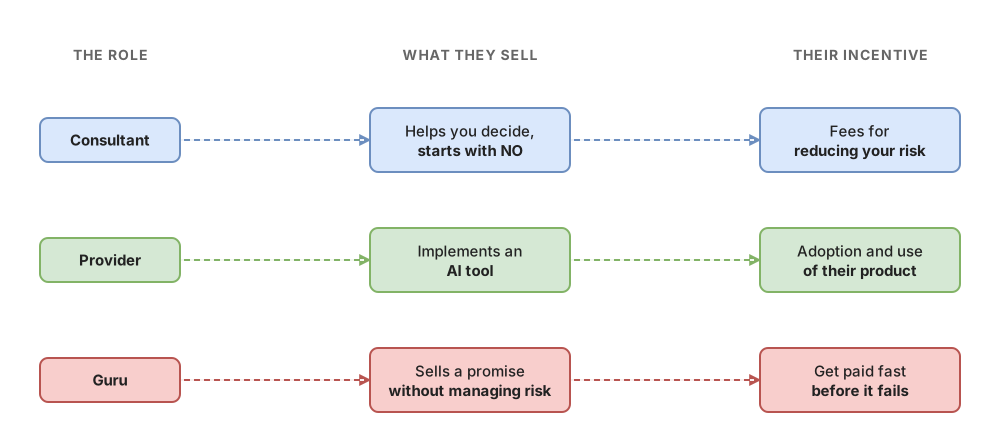
Before you compare candidates, tell apart three roles that people deliberately blur.
A consultant helps you decide. Their job is to understand your business, spot where AI adds something real and, quite often, tell you that a specific process isn’t worth touching. They charge for judgment, not for lines of code.
A vendor implements or sells you a specific tool. They can be excellent at what they do, but their natural incentive is for you to use their product, whether it fits your case or not. When a vendor proposes AI software, the conversation shifts: what matters then is what you demand of that software before you sign, a topic I cover separately in what to demand from AI-powered SaaS.
A guru sells a promise. They talk about “transformation” and “revolution”, about how your sector will disappear if you don’t act now. They rarely manage the risk of what they sell, because when the project fails, they’ve already been paid and moved on.
All three can call themselves “AI experts” on LinkedIn. The difference isn’t in the title. It’s in what happens when you ask them about what could go wrong.
Why the “no” is worth more than the “yes”
A good consultant narrows down, discards and prioritizes. They tell you that out of the ten ideas you brought, two are worth it, five can wait and three are a bad idea with AI in the mix. That “no” is exactly what you’re paying for.
Think about it from your own business. The value of a good finance director isn’t in approving spending, it’s in stopping the spending that shouldn’t happen. AI works the same way. The technology can do a lot of things, but many of those things don’t pay off given what it costs to set them up and keep them under watch.
The guru never says no, and that’s the tell. If someone claims AI is good for your customer support, your accounting, your marketing and your logistics alike, without having looked at any of those processes, they’re not advising you. They’re reciting a script. AI has concrete limits, and whoever knows them tells you before charging you.
To see where AI does fit with real cases and not with hot air, a useful map is the guide to AI use cases in business, the starting point for this set of articles.
They should have run a business, not just given demos
Impressing in a demo is easy. Sustaining something in production is another matter. “Production” means the system works every day, with real customers, when the consultant is no longer there to fix it live.
In a demo everything goes well because it’s staged. The chosen example, the clean data, the comfortable question. What you don’t see is what happens on Tuesday afternoon when an employee asks the system something odd and it answers, with total confidence, something it made up. That last part has a name: hallucination. It’s when an AI model produces a false answer but with the same convincing tone as a true one. It’s not an occasional glitch you can ignore. It’s a property of how the technology works, and whoever has put it into production knows this and designs around it.
That’s why it matters so much that the person has run a business or a team. Not for the prestige, but because they know the real cost of things: the salary of whoever supervises the system and the customer who gets angry when something fails. Someone who has only done demos sells the pretty part. Someone who has managed warns you about the full bill.
The guru’s red flags
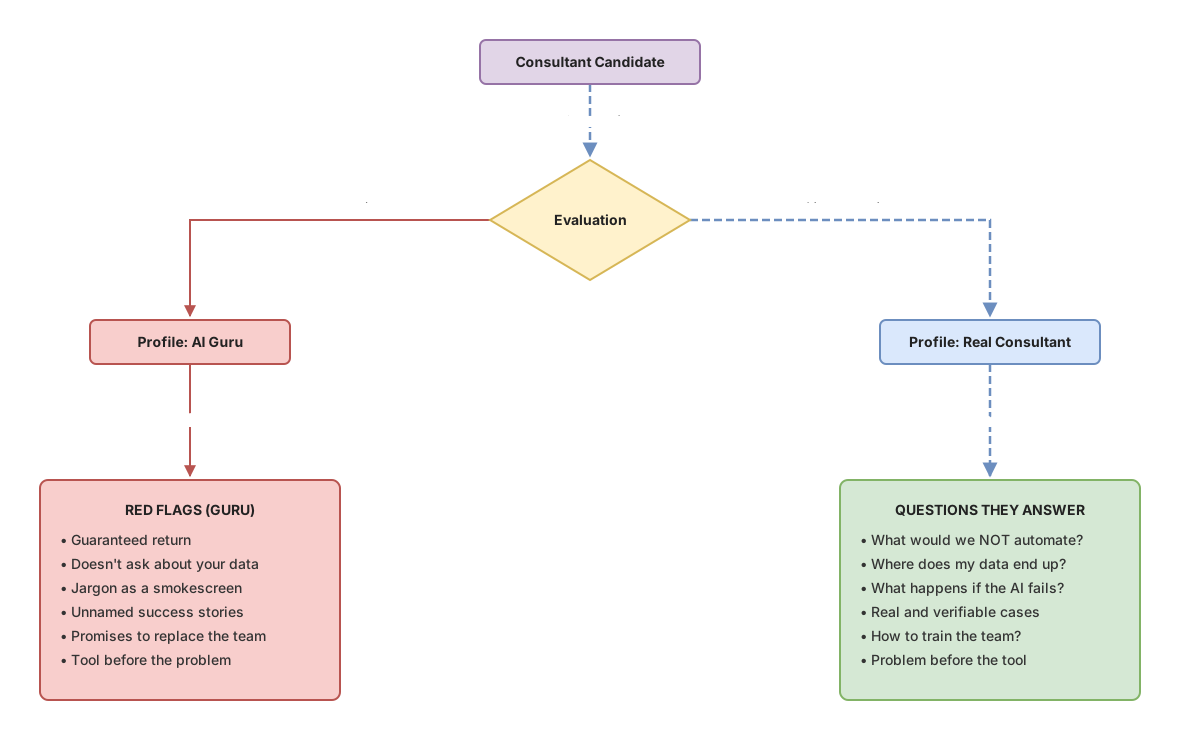
These are the signs that show up again and again when someone is selling you smoke. None is decisive on its own, but if you see several together, close the door.
They guarantee the return. No serious person guarantees a specific return on an AI project before knowing your data and your processes. If they put a profitability figure on the table in the first meeting, they’re selling, not measuring.
They don’t ask about your data. Useful AI is built on your data: your customers, your products, your history. If in the whole conversation they haven’t asked where that data comes from, what state it’s in and who can touch it, then their solution is the same for you as for anyone else. A generic approach rarely fits a specific business.
They use jargon as a smokescreen. A good consultant translates. They explain what a language model is in the words of your business and what it’s good for in your case. The guru does the opposite: they pile up English terms so you don’t understand enough to argue about the price. If you leave the meeting more confused than when you walked in, it wasn’t their intention for you to understand.
Their success stories have no name. “I worked with a big company in the sector that tripled its results.” Which one? Can I talk to them? If they can never name a client or show you a verifiable case, assume the case doesn’t exist or didn’t go the way they tell it.
They promise to replace your team. The “fire half your staff” pitch sells headlines and almost never plays out as painted. AI done well tends to change how your people work before it reduces how many you need. Whoever promises you massive cuts as an immediate result either knows the technology poorly or knows your fear well.
They sell the tool before understanding the problem. If by the second sentence they already know which product you’re going to buy, they haven’t diagnosed anything. They arrived with the answer already set.
On that last point and other ways to spot inflated marketing before you sign, complement this list with the signs of AI hype.
The questions you should be asking
Turn the meeting around. Instead of listening to their pitch, ask them these questions and watch whether they get comfortable or uncomfortable. Discomfort in the face of a good question is usually the most honest signal in the whole conversation.
- What would you not do with AI in my case, and why? (If they don’t have a “no”, they haven’t thought about you.)
- Who owns my data, where does it end up, and what happens to it if we stop working together?
- How are we going to measure whether this works? What number do we look at in three months?
- What happens when the system gets it wrong? Who catches it and how much does it cost to fix?
- If the project doesn’t pan out, how do I get out without being locked into your tool?
Notice that none of the questions are technical. They’re all about business, money and risk. A good consultant answers them with specifics and even thanks you for asking. The guru dodges them with more promises.
That judgment for telling the promise apart from the reality can be trained, and it’s exactly what we work on in the IA sin hype course: understanding what this technology actually does so you can direct a vendor with judgment instead of trusting their presentation.
Data, dependency and real cost: the three uncomfortable conversations
A good consultant brings up early three topics the guru avoids until you’ve already signed.
The first is your data. When you use an AI tool, your information usually leaves your company and passes through someone else’s servers. That has serious legal implications in Europe. The GDPR, the European data protection regulation, governs how you can handle the personal data of your customers and employees. And the European AI regulation, known as the AI Act, classifies systems by their level of risk and demands more control over the most sensitive uses. You don’t need to know it by heart. You do need your consultant to bring it up without you having to drag it out of them. (This is not legal advice: for a specific case, consult a specialized lawyer.)
The second is dependency. Some solutions tie you so tightly to a vendor that getting out costs almost as much as starting over. Ask from the start how you would recover your data and your operations if one day you want to switch. If the answer is vague, the dependency is part of the business model of whoever is selling it to you.
The third is the cost that isn’t on the initial invoice. The price of setting up the system is just the entry fee. After that come maintenance, the human supervision you need because AI gets things wrong, and the time your people spend learning to use it. In many projects that ongoing cost weighs more than the upfront investment. Whoever only talks to you about the setup price is showing you half the bill.
The buyer’s mistakes (not just the seller’s)
Not all the risk is on the seller’s side. A good share of AI projects that go wrong start with a mistake by the buyer.
Hiring based on the demo. The demo is designed to please you. Buying based on it is like choosing a car from the advert. Ask to see the system with your data and your case, even at a small scale, before you commit the big budget.
Not agreeing on how success is measured. If you don’t define in advance which number has to improve, any result can be sold as a success. “People are happier” isn’t a measure. “Customer response time drops by half” is.
Getting dazzled by the jargon. We already saw it as a seller’s red flag, but it’s also the buyer’s temptation: nodding along so you don’t look like you don’t get it. Do the opposite. Every time you don’t understand a word, ask them to translate it. If they can’t, that’s bad. If they won’t, worse.
Frequently asked questions
Does my small business need an AI consultant?
It depends on whether you have a specific problem that AI can solve better than what you already do. An honest consultant will tell you in the first conversation whether your case justifies the spend or whether, for now, it’s more worthwhile to wait. If no one on your team has technical judgment, having someone who translates and reins in your impulses usually pays off, even if it’s just a few hours of advice before you commit to anything.
How much should hiring an AI consultant cost?
There’s no standard figure, and be wary of anyone who gives you one without knowing your case. What matters isn’t the number, it’s that you understand why they charge that and what it includes. Always ask them to separate the setup cost from the ongoing cost of maintenance and supervision, because that’s where many budgets hide the expensive part. A low price that hides endless maintenance ends up costing more than a high, transparent one.
Better a freelance consultant or an agency?
Neither is better by default. A freelancer with real management experience can give you more judgment and honesty than a big agency that assigns you a junior. An agency can give you more hands and continuity if the project grows. Judge by the specific person who’s going to work with you and by the questions they ask, not by the size of the company behind them.
How do I know if a success story is real?
Ask for names and, if possible, to talk to that client. A real case survives contact: you can call and ask what was done, what it cost and what went wrong along the way. A made-up case always stays generic, with no name and no verifiable number. The test is simple: if they won’t let you verify it, treat it as if it didn’t exist.
What if I don’t have anyone technical to evaluate the proposal?
You can evaluate without knowing about technology, because the important questions are about business. Who owns the data, how success is measured, what happens when it fails and how to end the relationship don’t require knowing how to program. They require common sense and not letting yourself be impressed. And if you want to gain the judgment to lead these conversations without depending on anyone, that’s exactly why we made the IA sin hype course.
Related articles
AI Use Cases in Business: Which Ones to Prioritize
A framework for knowing which of your tasks are a good fit for AI and which ones are money down the drain: AI use cases in business, no hype.

AI hype red flags: how to spot vaporware in a proposal
A guide for non-technical decision-makers: the concrete signs that separate a serious AI proposal from hot air, before you sign and pay.
AI SaaS: What to Demand Before You Sign
Before signing an AI SaaS, demand five things in writing: what it does with your data, reliability, portability, usage pricing, and model changes.